Under pressure to publish, researchers sometimes consider paid support. Not all options are equivalent, and some raise ethical concerns. This guide outlines common paid publication support options and explains how they differ.
Under pressure to publish, researchers sometimes consider paid support. Not all options are equivalent, and some raise ethical concerns.
Below is a clear overview of paid publication support options, and how they differ.
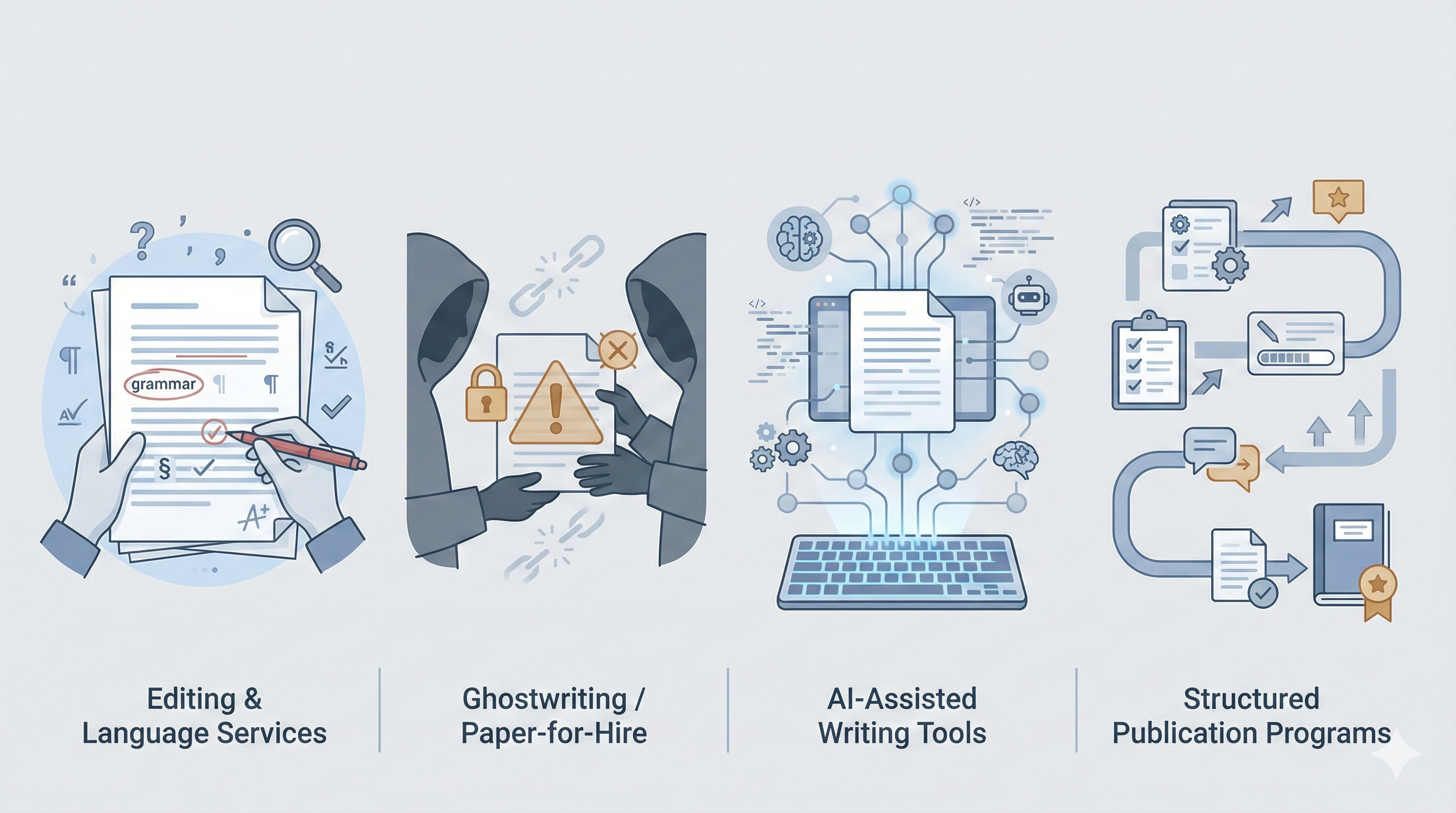
1. Editing and Language Services
These services focus on:
- grammar
- clarity
- formatting
They do not change the underlying research or address methodological issues.
Ethical status: generally acceptable when disclosed
Limitation: does not help with research design or execution
2. Ghostwriting and Paper-for-Hire Services
Some services offer to write papers on behalf of researchers. This practice raises serious ethical and academic integrity concerns and is discouraged by journals and institutions.
Ethical status: high risk / often prohibited
Limitation: jeopardises academic credibility
3. AI-Assisted Writing Tools
AI tools can help draft, summarise, or reorganise text. Responsible use requires transparency and human oversight.
Ethical status: evolving; depends on disclosure
Limitation: does not ensure correctness or publishability
4. Structured Publication Programs
A smaller number of programs focus on helping researchers do the work themselves, using structured guidance, feedback, and timelines.
Unlike editing or ghostwriting services, structured publication programs focus on guiding researchers through the research and submission process while preserving authorship and academic responsibility.
These programs typically:
- teach methods
- support execution
- guide submission and revision
They differ from editing services by prioritising researcher authorship and skill development.
Ethical status: aligned with academic norms
Limitation: requires active participation
Key takeaway
Accelerating publication ethically means improving process and execution, not outsourcing authorship. Researchers should choose support that strengthens their skills rather than replaces them.