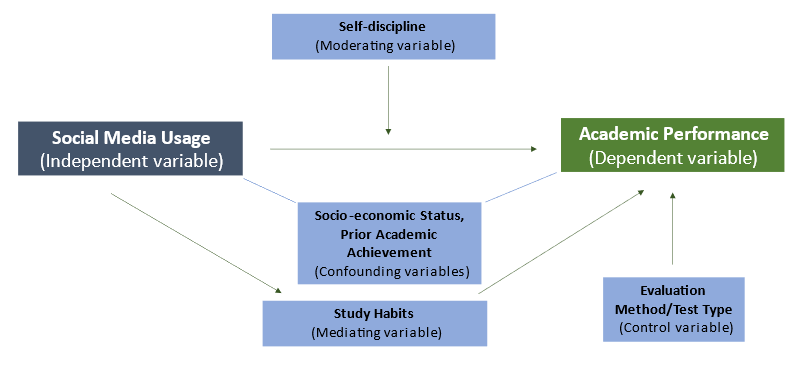
Many students are told they need a “conceptual framework” — without ever being told what that actually means.
As a result, they either:
try to invent one before reading the literature, or
panic because they can’t “see” it yet
Both approaches misunderstand what a framework is.
What a conceptual framework is not
It is not:
a diagram you draw at the start
a theory you impose on the literature regardless of what the evidence shows
a decorative figure for your chapter added to satisfy formal requirements
A framework is not invented.
It emerges, and it is about organisation and logic.
What a conceptual framework actually is
A conceptual framework is the organising logic of your review.
It answers:
How is this field structured?
What are the main ways researchers have approached the problem?
How do findings cluster meaningfully across studies?
- How do variables relate to each other and to outcomes?
It is the backbone that allows readers to follow the logic of the field.
Conceptual Frameworks Can Be Pre-Existing — But They Must Earn Their Role
A conceptual framework does not need to be invented from scratch.
In many fields, well-established frameworks already exist and are routinely used, such as:
- the WHO Health Systems Building Blocks framework
- social determinants of health models
- ecological or multilevel frameworks
- behaviour change or policy cycle models
- DAG-style logic models
Using an established framework is often good scholarship, not a weakness.
However, a framework should never be applied uncritically.
Even an off-the-shelf framework must:
- be relevant to your research question
- be supported by the evidence you are reviewing
- help expose patterns, tensions, and gaps — not obscure them
How frameworks emerge – or are refined – in practice
After extracting and comparing enough studies (often 15–30+), patterns begin to appear:
recurring themes
competing explanations
different mechanisms
methodological groupings
Your job is to organise the literature in a way that reflects those patterns – to find a structure.
Common frameworks organise literature:
by mechanism (economic, cultural, institutional)
by direction of evidence (supports, contradicts, mixed)
by level of analysis (individual, household, neighbourhood, firms, entire country)
by method (qualitative, quantitative, mixed, RCT, etc.)
You can combine these if the literature demands it.
A key insight students miss
You do not need to know your framework in advance.
If you can’t see one yet, that usually means:
you haven’t analysed enough papers
you haven’t compared them systematically
you’re still thinking at the level of individual studies
Framework clarity is earned through analysis, not forced in advance.
👉 If you’re waiting for structure to appear before reading deeply, you’ve reversed the process.