Most journal rejections are caused by unclear writing, not bad ideas. The PEER system gives a simple paragraph structure that makes your argument easy to follow: Point → Evidence → Explain → Repeat/Link.
How to Write Clear Academic Paragraphs Reviewers Can Follow
What PEER is
PEER is a paragraph design framework for academic writing. It helps you translate your thinking into a linear argument that readers (and reviewers) can understand quickly.
PEER stands for:
P — Point: a single, clear topic sentence
E — Evidence: data, citations, or examples that support the point
E — Explain: what the evidence means and why it matters
R — Repeat / Link: restate the point or transition to the next paragraph
The goal is not creative writing. It’s clarity, precision, and flow
The PEER “Hamburger” Model
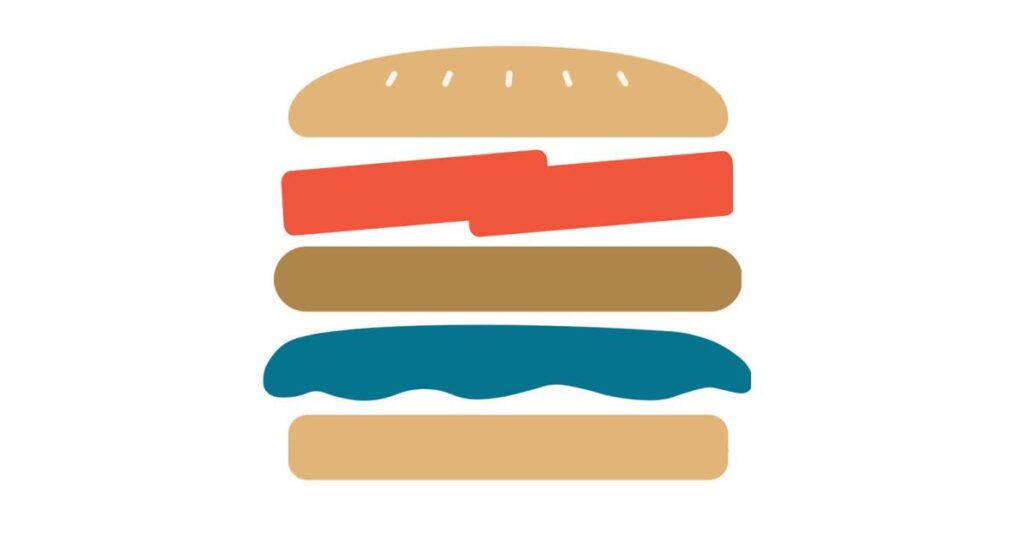
One way to visualise a PEER paragraph is as a single, self-contained unit — like a hamburger.
The first bun (Point) sets the topic and tells the reader what this paragraph is about.
The filling (Evidence + Explain) provides substance: data, citations, examples, and interpretation.
The second bun (Repeat / Link) closes the paragraph by reinforcing the point or bridging cleanly to the next idea.
Just as a hamburger only works when all its parts are present, a paragraph only works when all four PEER elements are doing their job.
If you remove the top bun, the reader doesn’t know what they’re getting.
If you remove the filling, there’s no substance.
If you remove the bottom bun, the paragraph collapses and the flow breaks.
PEER ensures that each paragraph stands on its own, while still contributing to the larger argument.
Why PEER matters
Academic writing succeeds when it takes complex thinking and makes it easy to grasp.
Many researchers assume reviewers reject papers because:
the reviewer was careless
the reviewer “didn’t get it”
the reviewer was biased
But in practice, reviewers often reject confusing writing. When the logic is hard to follow, they miss what you did, misunderstand your argument, and request changes that are “already in the paper.”
PEER reduces that risk by making each paragraph’s purpose instantly obvious.
The one-point rule (PEER depends on this)
Before PEER works, you need one rule:
Every paragraph should make one main point.
If a paragraph is trying to do multiple things at once, PEER won’t save it — because the “P” (Point) won’t be clear.
The most important part of PEER: the topic sentence
The topic sentence is the first line of the paragraph. It tells the reader:
what this paragraph is about
what the single “point” is
why they should keep reading
A simple quality test:
Read only the first sentence of every paragraph in your section.
If the argument still makes sense, your topic sentences are doing their job.
If that test fails, the problem is usually:
weak topic sentences
a missing outline
unclear thinking (which creates unclear writing)
A PEER paragraph example
Here is a simple example of PEER in practice:
Point: Regular physical activity can reduce depressive symptoms among adults.
Evidence: A meta-analysis by Smith et al. (2022) found that moderate aerobic exercise three times per week lowered depressive symptom scores by an average of 15%.
Evidence: A cohort study by Li et al. (2021) reported a 12% decrease in self-reported depression among adults who ran at least once per week.
Explain: These findings suggest that even modest but consistent exercise can meaningfully improve mental well-being, potentially through mood regulation, reduced stress physiology, and increased endorphin release.
Repeat/Link: Regular exercise therefore remains a viable non-pharmacological strategy for depression and may provide a foundation for future mind–body interventions.
You don’t need fancy prose. You need clean structure.
A quick self-check you can do today (2 minutes)
Open your draft and run this checklist on one paragraph:
Can I underline one sentence that states the paragraph’s single point?
Do I have at least one piece of evidence (citation, data, example)?
Did I explain why that evidence matters (not just restate it)?
Does the last sentence link forward, or at least land the point cleanly?
If you can’t answer “yes,” you’ve found exactly where revision should focus.
Common mistakes PEER fixes
PEER prevents three common writing failures:
Paragraphs with no point (just description)
Paragraphs with evidence but no meaning (citations without explanation)
Paragraphs that end abruptly (no transition, no landing)
Optional depth: watch the training
If you want to see PEER applied live (including the “topic sentence test” on published papers), you can watch the full training here:
Watch the PEER Writing Training on YouTube → CLICK TO WATCH HERE