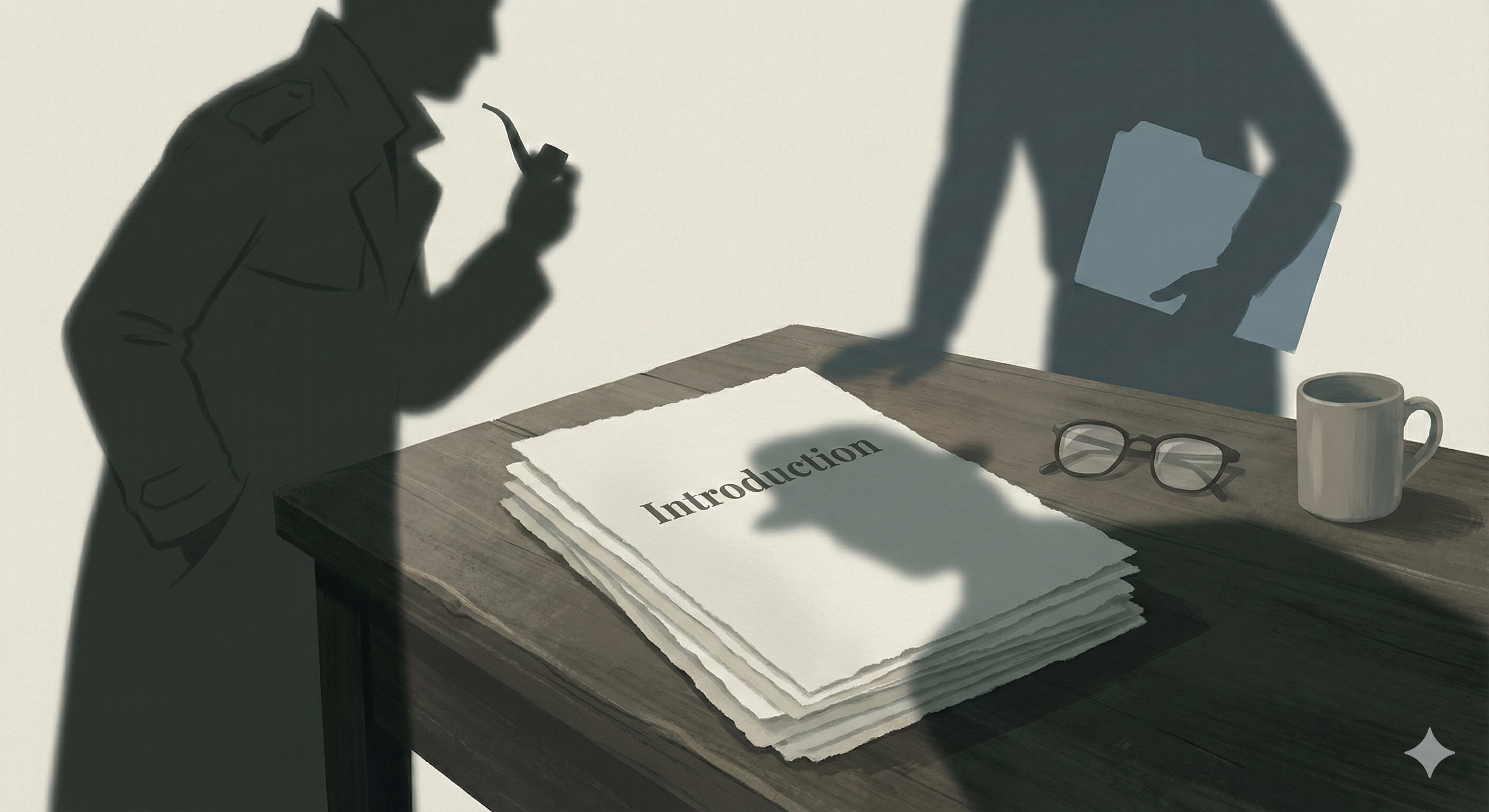
Titles and abstracts are diagnostic tools: editors use them to judge clarity, novelty, and feasibility in seconds. If the abstract feels hard to write, the issue is often upstream misalignment, not English.
Key insights (TL;DR)
Editors often diagnose project quality directly from the title
Long or jargon-heavy titles usually signal unclear research questions
Abstracts must show direction, not just description
You do not need “final results” to submit a strong abstract
Clear structure matters more than polished prose
Why Titles Matter More Than Most Researchers Think
A title is not just a label.
Experienced editors can tell, within seconds, whether a project is:
well-defined
feasible
anchored to a real debate
If a title is:
overly long
vague (“studying the effects of…”)
packed with jargon
unclear about outcomes
…it often signals deeper problems with:
topic definition
methods
or contribution
If you run out of breath reading your title, the reader will too.
The Hidden Function of a Good Title
A strong title quietly answers four questions:
Who or what is being studied? (Population)
What is changing or being tested? (Intervention / exposure)
Compared to what? (Implicit or explicit baseline)
What outcome matters? (Result of interest)
This logic holds even outside medicine.
If your title cannot be reduced to a clear linking sentence, your project is not yet ready.
Abstracts Are Not Mini-Introductions
Many researchers treat abstracts as compressed introductions.
That’s a mistake.
Editors read abstracts to answer one question:
“Do I understand what this paper does — and why it matters — without guessing?”
A strong abstract is linear, not poetic.
The Minimal Abstract Structure That Works Across Fields
Regardless of discipline, strong abstracts follow this sequence:
Why this matters now
(The problem, debate, or context)What we don’t yet know
(The gap — briefly)What this study does
(Design, data, or review type)What it shows (or will show)
(Results or preliminary findings)Why that matters
(Contribution or implication)
If one of these is missing, reviewers feel lost — even if the writing is fluent.
The Abstract Is a Coherence Test
If writing the abstract feels unusually difficult, the problem is rarely “writing.”
It usually means something upstream is misaligned:
the gap doesn’t match the results
the methods don’t clearly produce the results
the conclusion overclaims what the evidence supports
Use the abstract to diagnose alignment before you write the introduction.
Coherence checklist (2 minutes):
Does the Background claim match the actual results?
Does the Methods sentence explain how the results were produced?
Are the Results the same “top 3–5” findings you emphasize in the Discussion?
Does the Conclusion follow from those results (no overclaiming)?
If any answer is “no,” fix the paper’s logic first — not the wording.
“But My Research Isn’t Finished Yet…”
That’s okay.
For conference submissions and early abstracts:
You may state preliminary findings
Or frame results as expected or emerging patterns
What matters is not completeness — but direction.
Editors want to know:
where the project is going
and whether it’s going somewhere meaningful
The Most Common Abstract Mistake
The single most common failure we see:
The abstract describes what the author did,
but never clarifies what question is being answered.
If the reader cannot restate your research question after reading the abstract, it will struggle in review.
A Quick Self-Check (2 minutes)
Before submitting, ask:
Can a non-specialist understand the title?
Is the outcome explicit or implied?
Does the abstract move logically from problem → gap → study → contribution?
Could an editor summarize my paper in one sentence after reading this?
If not, revise before submitting.
Final perspective
Titles and abstracts are not cosmetic.
They are early warning systems — for you and for editors.
When they are clear, reviewers read generously.
When they are vague, reviewers look for reasons to say no.
Watch the full breakdown
Titles & Abstracts: How Editors and Reviewers Read First
→ Watch on YouTube